The honest answer first
Yes, if you like being on the water, going at your own pace and organising your own days. Probably not, if you are picturing a resort beach where you walk from your room into calm, sandy swimming water. Siargao is a low, green island of coconut palm, rice and mangrove, and much of its coast is reef. The stretch of shore in front of General Luna is not really a swimming beach: at low tide the reef flat is exposed, and at high tide it is shallow and lively. The swimming here happens on boat trips, in rivers and rock pools, and on sandbars.
That is worth knowing before you commit to the journey, because the journey is real. Most people arrive by a flight to Manila or Cebu, then a small plane into the island’s airport at Sayak in Del Carmen, or overland to Surigao City and across by boat to Dapa. Either way it is a travel day, sometimes two. The trip filters out the casual visitor, which is a large part of why the island still feels like itself.
Here is what non-surfing guests actually spend their days doing.
Boats, islands and sandbars
The standard day out from General Luna is the three islands: Guyam, a tiny thing with a handful of palms; Daku, bigger, with families who will cook a lunch of fish and rice for you; and Naked Island, a bare sandbar with no shade at all. Boats are hired by the boat rather than per person, so the cost per head drops if you can share with other travellers. There are also island fees collected on landing. Prices move with fuel and with the season, so ask locally the day before rather than trusting a figure you read online months ago.
Bring more shade and water than you think you need for Naked Island. There is nothing there. That is the whole point of it.
These trips are weather dependent. If the wind is up, boatmen will not go, and they are right not to. This happens more often in the windy months around the turn of the year.
Sugba Lagoon and the mangroves
On the Del Carmen side of the island, boats run out through an extensive mangrove forest to Sugba Lagoon, a sheet of green water between limestone walls, with a diving platform and paddleboards for hire. Trips are arranged through the tourism office in Del Carmen, and you register there before going out. Getting across the island to Del Carmen takes a chunk of the morning, so treat it as a full day rather than an afternoon.
The mangroves themselves are worth the ride. It is a different island from the coast: still water, herons, and boardwalks through the trees.
Magpupungko and the tide
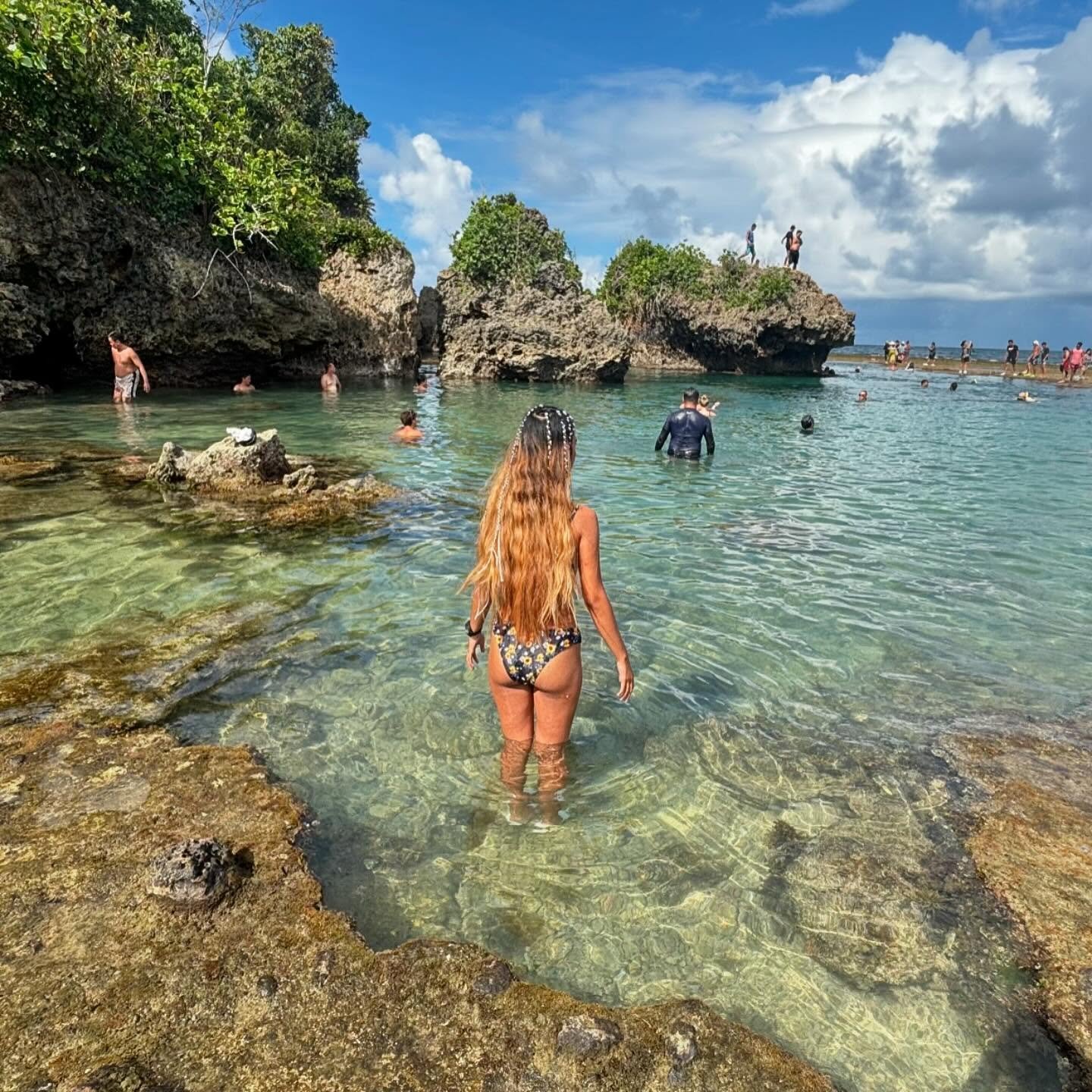
On the northeast coast near Pilar, the reef flat at Magpupungko holds a set of deep natural pools in the rock. They only work at low tide. At high tide the sea covers the whole shelf and there is nothing to see. Check the tide before you plan the day, and build the rest of the day around it. Almost everyone who comes away disappointed by Magpupungko arrived at the wrong hour.
A longer day to Bucas Grande
Sohoton Cove is on Bucas Grande, a separate island south of Siargao, and boats go from the Del Carmen side. It is a long day: an early start, an open crossing, then small paddled boats through a cave entrance that is only passable at certain states of the tide. There is a lagoon with stingless jellyfish, though how many are present varies through the year and nobody can promise them. Crossings depend on the sea state, and this is the trip most likely to be called off in windy weather.
Inland: palms, rivers and caves
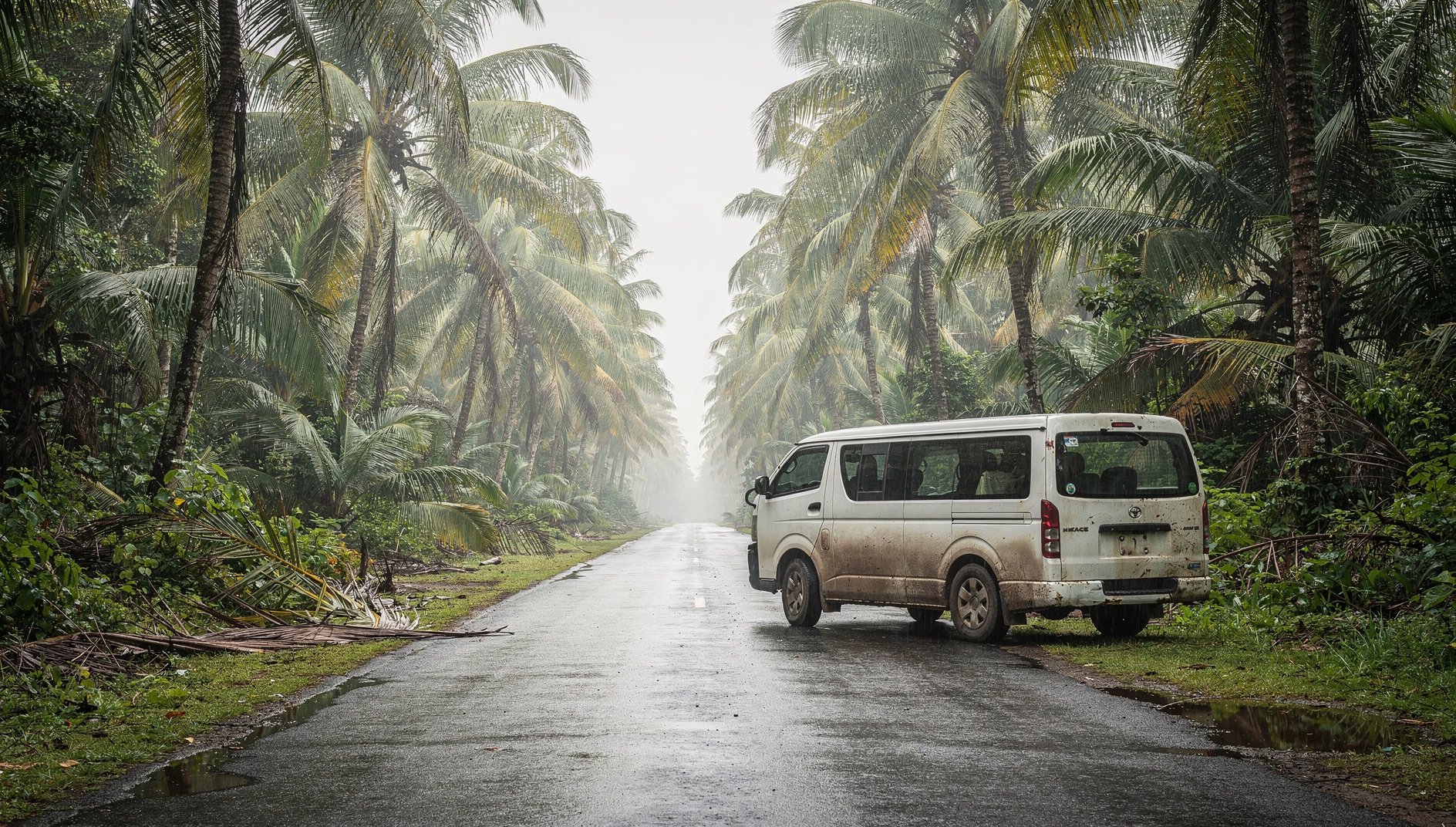
The interior is quietly the best part of the island for a non-surfer with a motorbike. The road that runs inland climbs to a viewpoint over an unbroken canopy of coconut palm, which is one of the few genuinely surprising sights here. Maasin River has the leaning palm tree and a rope swing. There are cave pools inland where you swim in cold fresh water under rock, with a guide.
And there is simply riding. The main roads are paved and the island is flat, so you pass through villages, drying rice, basketball courts and school gates all day.
The north coast
The villages up towards Pacifico, Burgos and Alegria are quieter, with fewer places to eat and long empty stretches of coast. Go for a day, or stay a night if you want to see what the island felt like before the tourism arrived.
Watching surfers is a legitimate activity
The boardwalk at Cloud 9 is a good place to sit early, while it is still cool, and watch people who are much better than you would be. You can also take a single beginner lesson on a small day at the sheltered beginner break without any intention of taking it up. Plenty of people do.
Which months suit a non-surfer
Broadly, the calmer, flatter part of the year runs from around March to June. Light winds, glassy sea, the best odds for island hopping and lagoons, and hot. Surfers find it dull, which is exactly why it suits everyone else.
From roughly September through November the swell arrives and the island fills with surfers, with more rain as the year goes on. Around December to February the northeast wind blows and the sea gets choppy, so boat days are cancelled more often. Rain can arrive in any month, and a grey wet week is always possible.
Practical things that catch people out
Bring cash. Card acceptance is patchy outside the bigger places in General Luna, and the island’s ATMs can run empty at weekends and holidays. Power cuts happen. Mobile signal thins out in the north and inland.
So, worth it?
If your ideal holiday is a lounger, a swim-up bar and a short transfer, no. If you are happy to be up early, spend three days out of seven on a boat or a bike, eat well and cheaply, and accept that the sea decides some of your plans, then the surf is genuinely beside the point. Most of the guests who stay longest here do not surf at all.