The short answer
Five nights is the point where the island stops feeling like a checklist. Seven to ten nights is where most people wish they had booked. Three nights is a taste, and it works, but you will spend a decent chunk of it on the road and on a boat and very little of it doing nothing.
The reason is not that Siargao is enormous. It is not. The reason is that almost everything worth doing here depends on something you do not control: the tide, the swell, the weather, and how long the road takes. Days do not stack neatly.
Why a day here holds less than you think
Three things eat your time.
The roads. The main circuit is paved and pleasant on a motorbike, but distances that look small on a map take real time, especially if it has rained or if you are not confident on two wheels. Getting from our end of the island to the far north and back is a day, not a morning. Add the ride in from the airport when you land, which is a good part of an hour depending on where you are staying, and your arrival day is mostly gone.
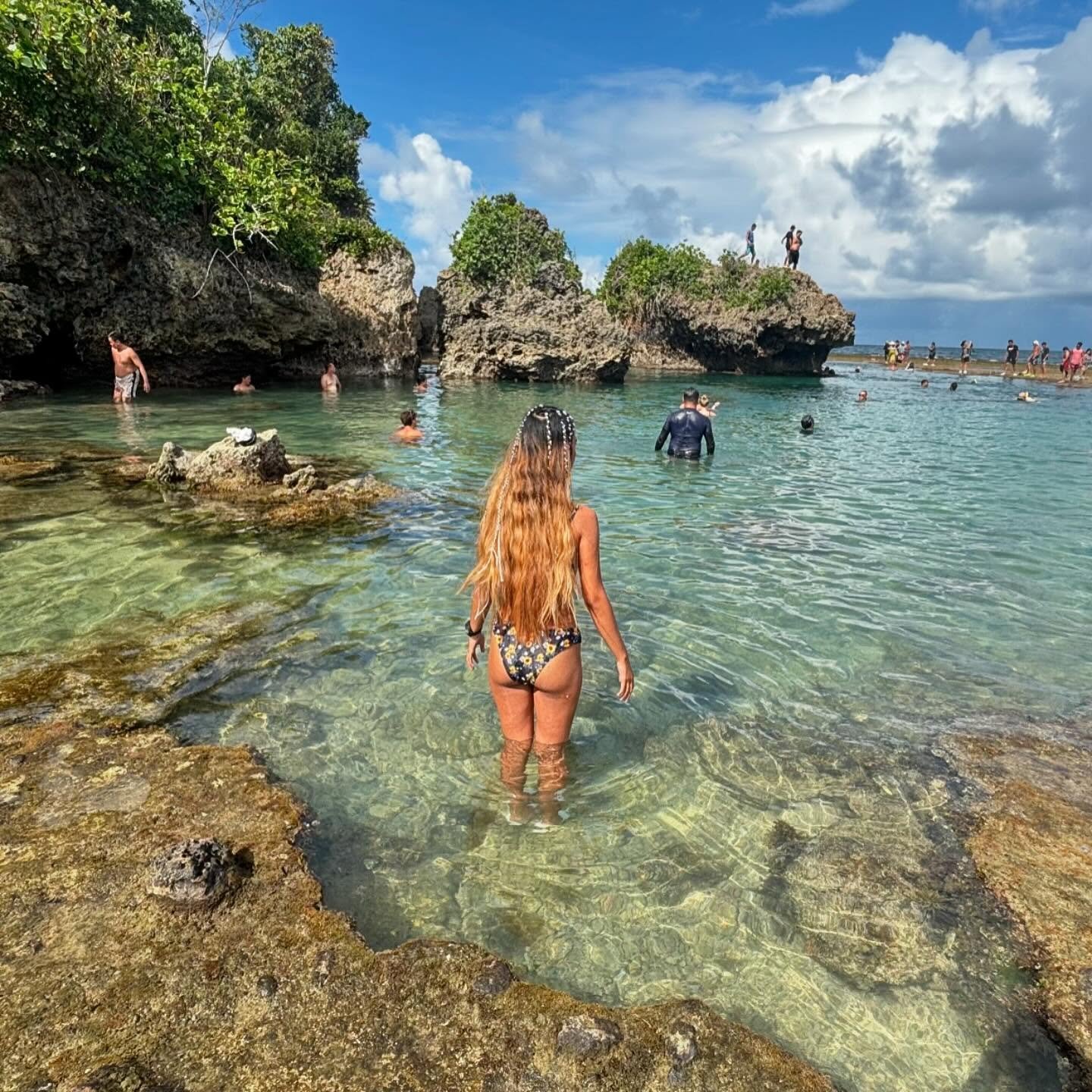
The tides. The rock pools at Magpupungko only exist at low tide. At high tide you are looking at open sea. That means the trip is scheduled by the moon, not by you, and on some days the low falls at an hour that does not suit you at all. Reef walks, some of the surf breaks and a few of the beaches work the same way. Ask about the tide table the day before, not the morning of.
The boats. Island hopping to the sandbars and small islands offshore is a half day at least, longer if you want to eat lunch on the sand. Sugba Lagoon over on the Del Carmen side is a full day by the time you have crossed the island, got on a boat through the mangroves and come back. Neither is something you squeeze in around something else.
So: three separate days, three separate mornings, and you have not surfed yet, not seen the north, and not had a single slow one.
Three nights
Doable, and plenty of people do it, usually because a flight schedule forced it. You get roughly two full days. Spend one on a boat and one on a motorbike, eat well in the evenings, accept that you will not see the north of the island, and come back another year.
What three nights does not give you is any margin. If the weather turns, and it does, that is half your trip. If the boat trip is called off because the crossing is rough, you have no second chance at it.
Five nights
This is where it starts to feel like a holiday rather than a transfer with swimming in it. Four full days is enough for the boats, the lagoon, the rock pools on a low tide, a run up the east coast, and one day where you get up late and do nothing much. That last day is the one people remember.
If you are here to learn to surf, five nights gets you three or four sessions at the beginner break, which is genuinely enough to stand up and know whether you want more of it.
Seven to ten nights
The comfortable answer. You stop planning. You start going back to the places you liked instead of hunting new ones, which is a different and better kind of day. There is room for the north, for the inland palm groves, for a second island hopping trip because the first one was good, and for two or three days that are just breakfast, sea, nap, dinner.
This is also the length where bad weather stops mattering. Lose two days to rain out of nine and you still had a week.
If you do not surf at all, seven nights still works, but it is worth reading what actually fills a non-surfer’s week here before you book ten.
Two weeks and beyond
After about ten days the island does start repeating itself, and that is not a criticism. Siargao is small. There is a finite number of beaches, viewpoints and lagoons, and you will have seen them.
What changes after two weeks is that you stop being a visitor doing things and start having a routine: the same breakfast place, the same break at the same tide, the same road home. People who stay a month are not seeing more of the island. They are seeing the same island slowly, which suits some people enormously and bores others by day twelve.
Be honest with yourself about which you are. If your idea of a good holiday is a new thing every day, ten nights is your number and a second week will drag. If your idea of a good holiday is knowing where everything is, come for a month.
What changes the answer
Surfing. If you came for waves, days are not the unit. Swells are. A good swell might last a few days and then go flat for a week, so a short trip is a gamble on timing and a long trip is insurance. Surfers who want more than a taste should think in weeks.
The season. The bigger, more consistent surf generally arrives with the northeast wind in the second half of the year, roughly from around August through the turn of the year, while the calmer, flatter months tend to fall in spring and early summer. Those flat months are the better ones for boat trips and swimming, and the worse ones for surfing. The wetter, windier stretch runs through the northeast monsoon months around the end of the year, when you should build in more spare days than you think you need.
Christmas and New Year. The weeks either side of Christmas and New Year are the busiest of the year on this island. Everything is fuller, boats are booked earlier, and a short trip is more stressful. If you are coming then, give yourself extra days rather than fewer.
If you want one number
Seven nights. Six full days. Enough for the boats, the tides, the road, the weather going wrong once, and two mornings where you do nothing at all. Book it, and if you end up wanting to stay longer, that is the normal outcome and not a planning failure.